
Ophthalmology
Our team’s expertise in ophthalmology includes navigating complex regulatory pathways for innovative therapies.
At iNGENū CRO, we understand the intricate nature of ophthalmology clinical trials and the vital role they play in advancing treatments for a wide range of eye conditions. Our team brings extensive expertise in the design, execution, and management of ophthalmology studies, ensuring that all aspects of the research process are handled with precision and care.
Our clinical team has comprehensive experience covering various ophthalmic conditions, including:
- Age-related Macular Degeneration (AMD)
- Diabetic Retinopathy
- Glaucoma
- Cataracts
- Retinal Vein Occlusion (RVO)
- Dry Eye Syndrome
- Uveitis
Disciplined,
Cost-Efficient Execution
while maintaining the Highest Quality
Local Trials,
Global Approvals
Access FDA Regulatory Expertise
Our Clinical Team has over
120
years
of Combined Clinical Trial Experience
Ophthalmology Clinical Trial Resources
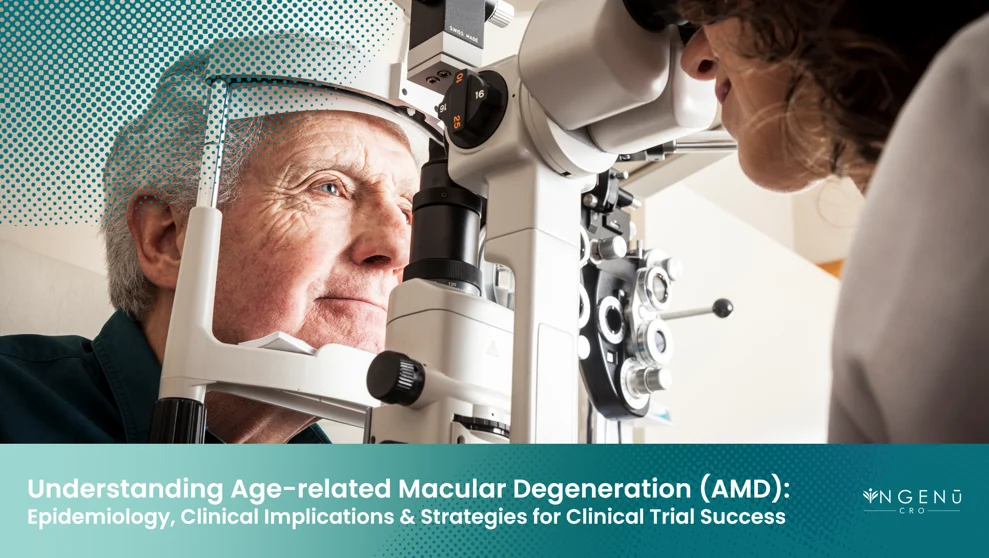
Age-Related Macular Degeneration
Understanding AMD: Epidemiology, Clinical Implications, and Strategies for Clinical Trial Success.

Glaucoma
Explore evolving insights into Glaucoma Clinical Research, including Clinical Trial Endpoints, and FDA Approvals.
Addressing Common Pain Points Associated with Ophthalmology Clinical Trials
Patient Recruitment and Retention
Problem:
Identifying and enrolling patients with specific eye conditions can be difficult, particularly when the symptoms are mild or the condition is rare. Ensuring long-term participation is essential but challenging.
iNGENū CRO addresses this pain point with Targeted Recruitment Strategies:
iNGENū utilises a combination of advanced patient databases, partnerships with ophthalmology clinics, and engagement with patient advocacy groups to identify and enroll suitable candidates efficiently. We prioritise patient-centric trial designs to enhance recruitment and retention.
Specialised Imaging and Diagnostics
Problem:
Ophthalmic studies often require advanced imaging techniques such as Optical Coherence Tomography (OCT), fundus photography, and fluorescein angiography. Consistency and accuracy in these diagnostics are critical.
iNGENū CRO addresses this pain point with State-of-the-Art Imaging:
We partner with leading ophthalmology centers equipped with the latest imaging technologies. Our trials incorporate standardised imaging protocols and training for site staff to ensure consistent data collection across all sites.
Outcome Measures
Problem:
Many ophthalmic conditions rely on subjective patient-reported outcomes (PROs) and visual acuity measures, which can introduce variability in data collection and interpretation.
iNGENū CRO addresses this pain point with Objective and Subjective Outcomes:
We design trials that incorporate both objective measures (e.g., imaging biomarkers, visual function tests) and validated subjective outcomes. Our statisticians are adept at analyzing complex data sets to account for variability in patient-reported outcomes.
Regulatory Requirements
Problem:
Ophthalmology trials often involve complex regulatory pathways, particularly when dealing with innovative treatments such as gene therapy, biologics, or medical devices.
iNGENū CRO addresses this pain point with Regulatory Expertise:
iNGENū’s regulatory affairs team is well-versed in the specific requirements for ophthalmology trials. We provide comprehensive support, from IND/IDE submissions to navigating the approval processes for innovative treatments.
Safety Concerns
Problem:
Given the sensitivity of the eye and the potential for adverse events, particularly in surgical interventions or invasive procedures, vigilant safety monitoring is crucial.
iNGENū CRO addresses this pain point with Robust Safety Monitoring:
Our safety protocols include continuous monitoring, real-time data analysis, and a dedicated safety board to oversee the well-being of participants. We also emphasise clear communication with all stakeholders to manage risks effectively.
The iNGENū CRO Difference

Local Trials, Global Approvals
We uniquely combine Australian expertise with direct FDA submission capabilities.

Disciplined, Cost-Efficient Execution
iNGENū CRO takes a highly strategic approach to clinical research.

Australian-Headquartered, Asia-Pacific Reach
We provide sponsors with comprehensive trial capabilities.
We have been using iNGENū for a Phase 1, first-in-human trial of our investigational drug. We have been very happy with all aspects of the management of the clinical trial.

Ready to discuss your Ophthalmology Clinical Trial?